Tree felling vids

  • Thread starter Thread starter Reddog
  • Start date Start date
  • Replies Replies 10K
  • Views Views 2M
This one should be food for thought. The commenters are impressed. Your thoughts?


Tear-limiting undercut near the collar near the base first in case of premature limb failure.
The offset is large enough to prevent interfering with the release cut, I think.

Good cut.


Coos Bay may be less risk of a bound saw compared to boring.
 
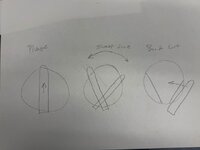
I have been using a jump cut of sorts. Single kerf undercut about a third deep, single kerf cut on the far side but keeping that cut vertical in relation to the undercut about a third deep, single kerf cut on the near side severing the corner, and sweeping down for the release. They pop off nice and clean with the “hinge” fibers in the middle of the cut. I’ve taken some pretty big hardwood limbs that way, basically leaving a nice collar cut.
 
Yes. I do this same thing to prevent barberchairs and to slide off sizable/ machine-handleable/ millable maple logs.


All kerfs, no face.


Basically leaving a square/rectangular peg of central holding wood that gets 'Coos Bay'-ed off.
 
That has been a standard bucking cut, more or less, for a long time here in the PNW.

If there is top bind you do the vertical offside cut first reaching over the top of the log, draw over the top on the belly of the bar, continue on down the near side with the tip, then slide on underneath and release by cutting upwards through the "square" with the top of the bar. The bar never leaves the wood from start to finish when a smooth sawyer wields the saw well.

With bottom bind, after the first offside cut, you pull the saw free, place the bar under the log and cut upwards, then draw the bar back and again with the tip cut upwards on the near side, then push over the top and complete the cut down through the "square". In this case the last three cuts are performed all in a continuous motion, three sides done without removing the bar from the log.

In both cases, all the kerfs are in alignment, and the depth of the cuts are generally equal, though that may well vary depending on degree of bind.

 

Users who are viewing this thread

Back
Top